Want more sign images? Work through the 39 illustrated NSW road-sign, signal and marking questions.
Read signs in the right order
Start with the sign family. A red circle, a yellow diamond, a parking panel and a motorway lane signal each communicate in a different way. Then read the symbol, number, arrow and any smaller supplementary panel.
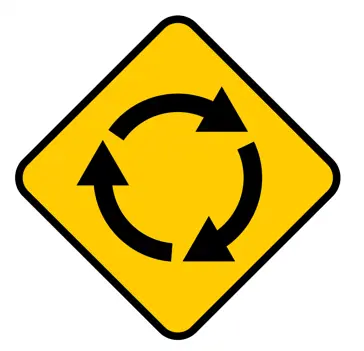
Finally, translate the sign into a driver action. Knowing that a sign means ‘roundabout ahead’ is useful; knowing to reduce speed, scan for circulating traffic and choose the correct lane is what keeps the situation safe.
- Identify the sign family
- Read every symbol, arrow and time panel
- Adjust speed and road position early
- Continue checking for people, traffic and changed conditions
Regulatory and parking signs
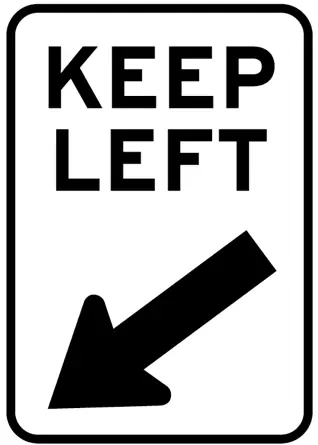
Regulatory signs tell you about a rule that applies at that place. STOP, GIVE WAY, speed-limit, turn restriction, keep-left and lane-use signs belong in this group. Treat the instruction as applying even when the road looks empty.
Parking signs often combine letters, arrows, days, times and exceptions. Work from the top of the panel down, confirm which direction the arrow covers, and check whether a second rule applies at another time.
A STOP sign requires a complete stop. A GIVE WAY sign may not require a stop, but it always requires you to slow, assess and give way when necessary.
Warning, school-zone and roadwork signs
Most permanent warning signs use a black symbol on a yellow diamond. They describe the hazard ahead rather than granting priority. Curves, merging traffic, crossings and changed road layout all call for an early speed and observation adjustment.
School-zone, roadwork and temporary signs can include a displayed speed or operating times. Obey the current sign and remain ready for children, workers, plant, temporary lanes or a queue beyond the first warning.
Motorway and lane-control signs
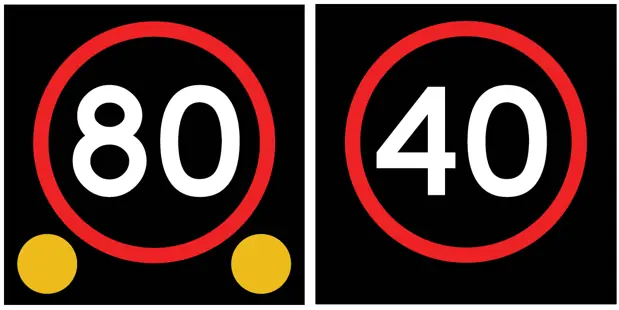
Overhead lane signals apply to the lane below them. A red cross closes a lane. A white diagonal arrow tells you to move in the direction shown when safe. Variable speed signs are enforceable while displayed.
Direction, exit and service signs should be read early. Last-second lane changes are a common sign-reading failure: if you miss an exit, continue safely and choose another route.